
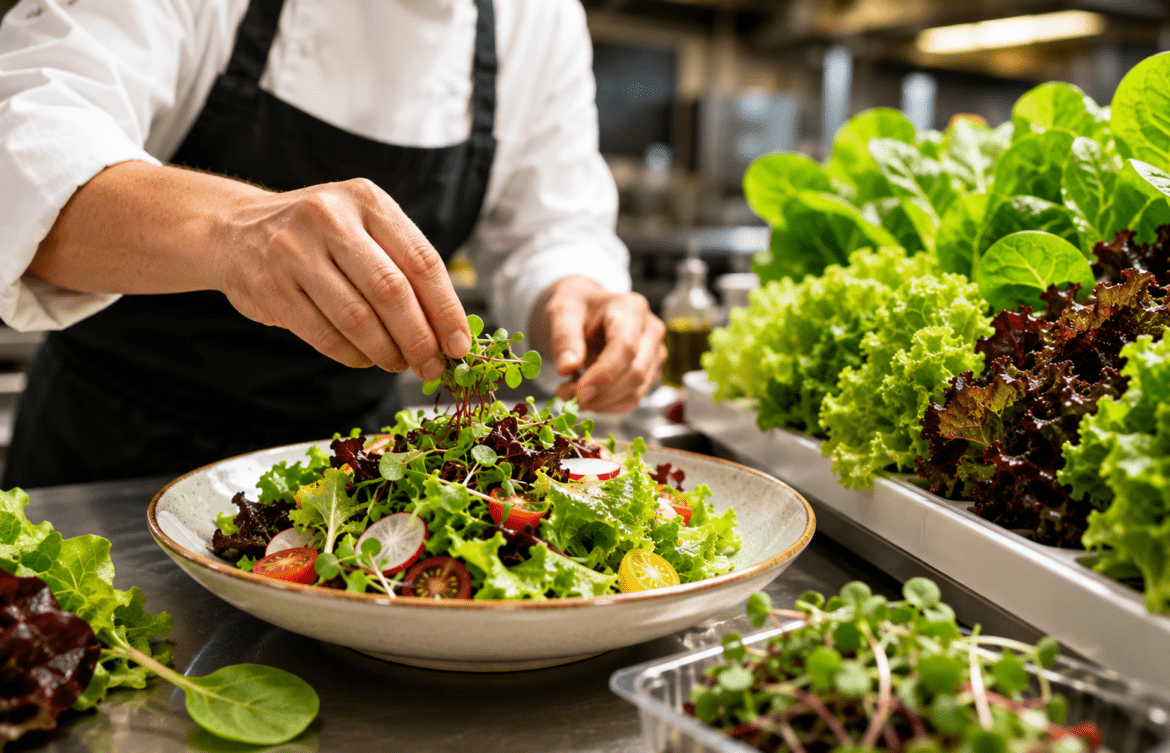
The Secret Behind Restaurant-Quality Salads: Why Top Chefs Choose Hydroponic Greens
- 06 Jun, 2026
- Posted by ruchit seo.inhydro
- 0 Comment(s)
Restaurant salads often seem fresher, crisper, and more visually appealing than the salads most people prepare at home. Every leaf looks vibrant, every bite delivers a satisfying crunch, and the flavors feel remarkably balanced. While culinary expertise certainly contributes to this experience, many professional chefs will tell you that exceptional salads begin with exceptional ingredients.
One ingredient has become increasingly popular among chefs worldwide: hydroponic lettuce and other hydroponic greens.
Grown without soil in carefully controlled environments, hydroponic greens offer unmatched freshness, consistency, cleanliness, and flavor. These advantages have made them a preferred choice in restaurants, hotels, cafes, and farm-to-table establishments.
In this article, we’ll explore why top chefs choose hydroponic greens and how these innovative vegetables are helping create restaurant-quality salads that customers love.
Popular Hydroponic Greens Used in Salads
| Hydroponic Green | Texture | Flavor Profile | Common Uses |
|---|---|---|---|
| Hydroponic Lettuce | Crisp | Mild | Garden Salads |
| Romaine Lettuce | Crunchy | Slightly Sweet | Caesar Salads |
| Butter Lettuce | Soft | Buttery | Gourmet Salads |
| Arugula | Tender | Peppery | Specialty Salads |
| Kale | Firm | Earthy | Nutrient-Rich Bowls |
| Spinach | Smooth | Mild | Mixed Greens Salads |
Why Chefs Care So Much About Salad Quality
Unlike cooked dishes, salads expose every ingredient. There is little opportunity to hide imperfections.
Chefs focus on several factors when selecting greens:
| Quality Factor | Why It Matters |
|---|---|
| Freshness | Determines texture and flavor |
| Appearance | Influences first impressions |
| Consistency | Ensures repeatable dishes |
| Shelf Life | Reduces food waste |
| Preparation Time | Improves kitchen efficiency |
| Flavor | Enhances customer satisfaction |
Hydroponic greens excel in each of these areas, making them an attractive option for professional kitchens.
The Freshness Advantage of Hydroponic Lettuce
Freshness is one of the biggest reasons chefs prefer hydroponic lettuce.
Many hydroponic farms are located near urban centers and restaurants, reducing transportation time and ensuring greens arrive shortly after harvest.
Benefits of Fresher Greens
| Benefit | Impact |
|---|---|
| Better Moisture Retention | Crisp Texture |
| Stronger Flavor | Improved Taste |
| Longer Shelf Life | Reduced Spoilage |
| Enhanced Nutrients | Greater Health Value |
| Better Appearance | Attractive Presentation |
Fresh produce creates memorable dining experiences, and hydroponic greens consistently deliver that freshness. Because they are often harvested closer to their point of consumption, they retain their natural crunch, vibrant color, and delicate flavor for longer periods. This gives chefs confidence that every salad served to customers meets the highest standards of quality and presentation.
Cleaner Greens Mean Less Preparation
Traditional vegetables often arrive with dirt, dust, and debris that require extensive washing.
Hydroponic greens are grown in clean, controlled environments.
Preparation Comparison
| Task | Traditional Greens | Hydroponic Greens |
|---|---|---|
| Washing | Extensive | Minimal |
| Soil Removal | Required | Rarely Needed |
| Leaf Inspection | Frequent | Less Frequent |
| Trimming | More Common | Less Common |
| Total Prep Time | High | Low |
For restaurants handling hundreds of meals daily, these time savings are significant. By reducing the need for extensive washing and preparation, hydroponic greens help kitchen staff work more efficiently while maintaining consistently high food quality. This allows chefs to focus more on presentation, flavor, and customer experience rather than time-consuming prep work.
Consistency Every Chef Can Trust
Weather, pests, droughts, and seasonal conditions can dramatically affect traditional crops.
Hydroponic farming eliminates many of these variables.
Consistency Comparison
| Factor | Traditional Farming | Hydroponic Farming |
|---|---|---|
| Weather Impact | High | Minimal |
| Appearance | Variable | Consistent |
| Flavor | Seasonal Changes | Stable |
| Availability | Seasonal | Year-Round |
| Supply Reliability | Moderate | High |
For chefs, consistency means every customer receives the same quality experience regardless of the season. Whether it’s the middle of summer or winter, hydroponic greens maintain their appearance, flavor, and texture. This reliability allows restaurants to deliver consistent menu items, improve customer satisfaction, and reduce the uncertainty that often comes with seasonal produce.
Superior Texture Creates Better Salads
Texture plays a crucial role in customer satisfaction.
The best lettuce for salads offers:
- Crispness
- Tenderness
- Balanced moisture
- Pleasant mouthfeel
Hydroponic lettuce develops under optimized growing conditions, often resulting in superior leaf quality and texture.
The result is a salad that feels fresh and enjoyable with every bite.
Popular Hydroponic Greens Used by Professional Chefs
Hydroponic Romaine Lettuce
– Perfect for Caesar salads due to its signature crunch and sturdy leaves.
Hydroponic Butter Lettuce
-Favored for gourmet dishes because of its soft texture and elegant appearance.
Hydroponic Arugula
-Adds a peppery flavor profile that complements premium ingredients.
Hydroponic Kale
-Provides nutrition and texture while remaining tender enough for raw preparations.
Hydroponic Spinach
-A versatile green used in everything from salads to smoothie bowls.
Sustainability Matters to Modern Restaurants
Consumers today care not only about flavor but also about how their food is produced. Sustainability has become a major consideration for restaurants looking to meet customer expectations while reducing their environmental impact.
Hydroponic farming offers several sustainability advantages compared to traditional agriculture. Because water is continuously recycled within the growing system, significantly less water is required. Controlled growing environments can also reduce pesticide use and make it possible to grow food closer to major cities.
Sustainability Comparison
| Sustainability Factor | Hydroponic Farming | Traditional Farming |
|---|---|---|
| Water Usage | Very Efficient | Higher Consumption |
| Land Requirements | Lower | Higher |
| Pesticide Use | Reduced | Often Higher |
| Transportation Distance | Often Shorter | Often Longer |
| Year-Round Production | Yes | Seasonal |
Restaurants that prioritize sustainability often view hydroponic greens as a practical way to support environmentally responsible sourcing without compromising quality.
Reducing Food Waste in Professional Kitchens
Food waste is a significant challenge for restaurants. Wilted greens, damaged leaves, and inconsistent produce often result in ingredients being discarded before reaching customers.
Hydroponic greens help reduce waste because they generally offer better shelf life, improved uniformity, and less damage during transportation and storage.
Food Waste Reduction Benefits
| Factor | Hydroponic Greens | Traditional Greens |
|---|---|---|
| Shelf Life | Longer | Shorter |
| Leaf Damage | Minimal | More Common |
| Usable Yield | Higher | Lower |
| Spoilage Rate | Lower | Higher |
Reducing food waste not only improves profitability but also contributes to more sustainable restaurant operations.
How Hydroponic Greens Enhance Salad Presentation
Presentation is one of the most important aspects of modern dining. Before customers take their first bite, they evaluate a dish based on its appearance.
Hydroponic greens are known for their vibrant color, uniform size, and attractive leaf structure. These qualities help chefs create visually stunning salads that immediately communicate freshness and quality.
Whether it’s a premium Caesar salad, a gourmet mixed greens bowl, or a colorful farm-to-table dish, hydroponic greens provide the visual appeal that restaurants strive for.
Presentation Benefits
| Visual Factor | Benefit |
|---|---|
| Vibrant Green Color | Signals Freshness |
| Uniform Leaf Size | Professional Appearance |
| Minimal Blemishes | Premium Presentation |
| Consistent Shape | Better Plating |
Beautiful ingredients help chefs create memorable dining experiences, improve customer satisfaction, and increase the perceived value of every dish served.
Creating Restaurant-Quality Salads at Home
You don’t need to be a professional chef to enjoy restaurant-quality salads. By starting with fresh hydroponic greens and focusing on ingredient quality, anyone can create impressive salads at home.
The key is combining fresh greens with complementary textures, flavors, and colors. Adding ingredients such as nuts, seeds, cheese, fruits, and premium dressings can transform a simple salad into a memorable meal.
- Choose fresh hydroponic greens whenever possible.
- Mix different textures for variety.
- Add healthy fats such as avocado or nuts.
- Use quality dressings in moderation.
- Serve immediately after preparation.
- Keep ingredients chilled until serving.
These simple techniques can dramatically improve the freshness, appearance, and flavor of homemade salads.
Best Hydroponic Greens for Different Salad Types
| Salad Type | Recommended Green | Why It Works |
|---|---|---|
| Caesar Salad | Romaine Lettuce | Excellent crunch and structure |
| Garden Salad | Hydroponic Lettuce | Mild flavor and crisp texture |
| Gourmet Salad | Butter Lettuce | Soft, elegant leaves |
| Mediterranean Salad | Arugula | Peppery flavor profile |
| Protein Bowl | Kale | Rich texture and nutrition |
| Mixed Greens Salad | Spinach | Versatile and mild flavor |
Frequently Asked Questions
Are hydroponic greens healthier than traditional greens?
Hydroponic greens can be just as nutritious as traditionally grown vegetables. Because nutrients are carefully managed throughout the growing process, hydroponic greens often maintain excellent nutritional quality while delivering exceptional freshness.
Why do chefs prefer hydroponic lettuce?
Chefs value hydroponic lettuce because it offers superior freshness, consistent quality, longer shelf life, reduced preparation time, and attractive presentation. These advantages help restaurants maintain high standards while reducing waste.
Do hydroponic greens taste different?
Many people describe hydroponic greens as cleaner, fresher, and more consistent in flavor. Because environmental conditions are controlled, the taste profile remains stable throughout the year.
Are hydroponic greens environmentally friendly?
Hydroponic farming can use significantly less water, reduce transportation distances, and require less land compared to conventional agriculture. These benefits make it an attractive option for sustainable food production.
Which hydroponic green is best for salads?
Hydroponic lettuce, romaine lettuce, butter lettuce, spinach, kale, and arugula are all excellent choices. The best option depends on the flavor, texture, and style of salad being prepared.
Conclusion
Restaurant-quality salads begin with exceptional ingredients, and hydroponic greens have become one of the most trusted choices among professional chefs. Their unmatched freshness, crisp texture, vibrant appearance, and reliable consistency make them ideal for creating premium salads that stand out on any menu.
From hydroponic lettuce and romaine lettuce to butter lettuce, spinach, kale, and arugula, these greens offer advantages that extend beyond taste alone. Reduced preparation time, longer shelf life, improved sustainability, and lower food waste make them a smart choice for restaurants and home cooks alike.
As consumers continue to seek fresher, healthier, and more sustainable food options, hydroponic farming is poised to play an increasingly important role in modern agriculture. For chefs looking to deliver memorable dining experiences, the secret is simple: start with the freshest greens possible. Increasingly, those greens are hydroponically grown.
