
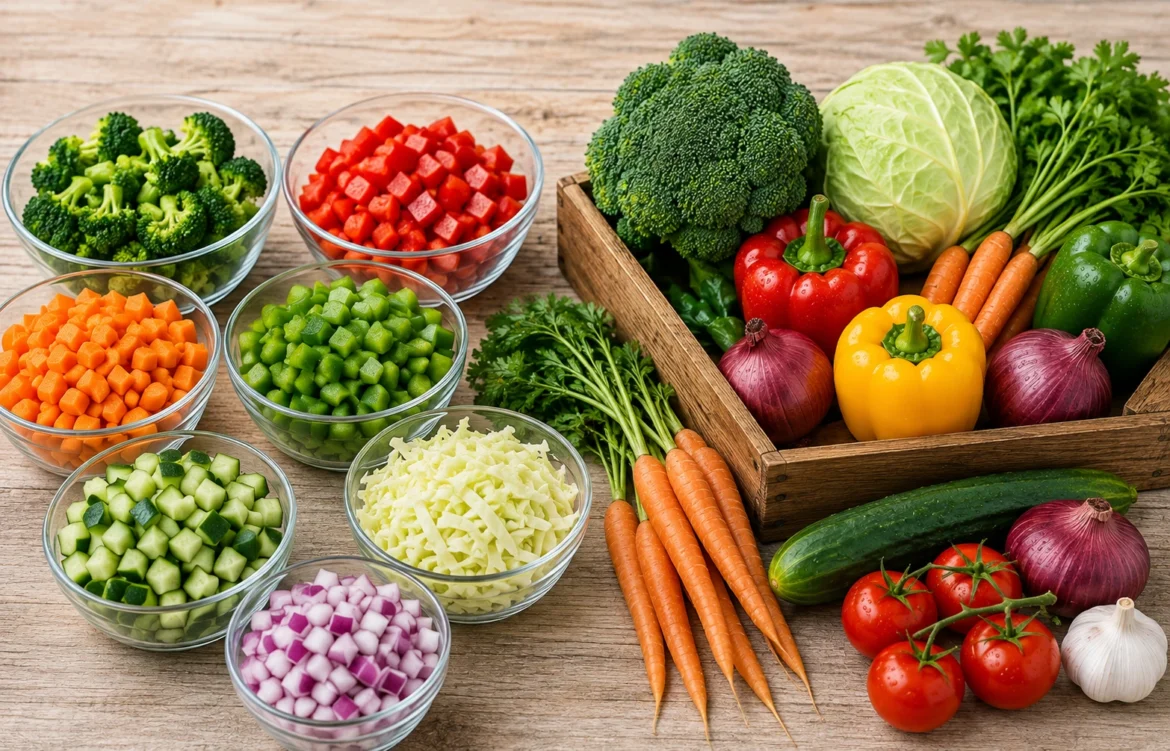
Fresh-Cut vs Whole Vegetables: Why Chopped Vegetables Are Better
- 24 Aug, 2026
- Posted by InHydro Team
- 0 Comment(s)
Preparing vegetables every day can take more time than people realize. Washing, peeling, trimming, chopping, cleaning the cutting board, and preparing ingredients can make even a simple meal feel like a long process.
This is why chopped vegetables and fresh-cut vegetables can be such a practical option for everyday cooking. When vegetables are already prepared, you can spend less time on repetitive kitchen preparation and more time actually cooking and enjoying your meals.
Fresh-Cut Vegetables vs Whole Vegetables: What’s the Difference?
Whole vegetables are vegetables that remain largely uncut and require preparation before they are used. Depending on the vegetable and recipe, preparation may involve washing, peeling, trimming, slicing, dicing, or chopping.
Fresh-cut vegetables have already gone through some of this preparation. They may be peeled, sliced, diced, chopped, shredded, or cut into convenient portions.
The biggest difference is preparation and convenience. With whole vegetables, you have complete control over the size and shape of every cut. With chopped vegetables, much of that work has already been completed.
For someone who cooks every day, this difference can be significant. Instead of spending several minutes preparing vegetables before each meal, you can take the required amount from your prepared ingredients and move directly to cooking.
Why Chopped Vegetables Are Ideal for Meal Prep
Meal prep is designed to make cooking easier throughout the week. Rather than preparing every ingredient from scratch every day, you organize ingredients ahead of time so meals can be assembled more efficiently.
Chopped vegetables fit naturally into this approach.
1. Save Preparation Time
One of the biggest advantages of chopped vegetables is the time saved during meal preparation. Instead of washing, trimming and cutting vegetables every time you cook, prepared vegetables can be ready to use.
This is particularly useful when you’re preparing meals before work, cooking dinner after a long day, or trying to prepare several meals at once.
2. Make Weekday Cooking Easier
Weekday cooking often involves limited time. When your vegetables are already prepared, you can start cooking almost immediately.
Chopped onions can go into a pan, prepared carrots can go into a soup, and chopped broccoli can be added to a stir-fry without starting the preparation process again.
3. Make Portioning Easier
Chopped vegetables can also make meal planning more organized. You can divide vegetables into portions according to the meals you intend to prepare.
For example, you might prepare one portion for lunch, another for dinner, and another for salads. This can make it easier to plan ingredients and avoid preparing more vegetables than you need.
4. Simplify Salad Preparation
Salads often contain several different vegetables, and preparing each ingredient individually can take time.
Fresh-cut vegetables can make this process much easier. Carrots, cucumber, onions, cabbage, bell peppers and other vegetables can be prepared ahead of time and combined when you’re ready to make a salad.
If you’re regularly cutting vegetables for salad, preparing suitable ingredients in advance can reduce the amount of work required before serving.
5. Reduce Repetitive Kitchen Work
Cooking isn’t the only part of meal preparation. There is also washing, trimming, cutting, cleaning utensils and handling vegetable scraps.
Preparing vegetables in advance can reduce how often you need to repeat these tasks. Instead of chopping vegetables every evening, you can prepare an appropriate quantity at one time and use it across several meals.
6. Make Multiple Meals Easier to Prepare
A selection of chopped vegetables can be used in many different dishes.
- Soups
- Stir-fries
- Curries
- Fried rice
- Pasta
- Salads
- Wraps
- Sandwiches
This versatility makes chopped vegetables particularly useful for people who want flexible meal preparation.
Fresh-Cut Vegetables vs Whole Vegetables
| Feature | Fresh-Cut / Chopped Vegetables | Whole Vegetables |
|---|---|---|
| Preparation | Minimal preparation required | More preparation required |
| Meal Prep | Very convenient | Requires additional work |
| Portioning | Easy | Requires cutting |
| Salad Preparation | Quick | Requires preparation |
| Cutting Flexibility | Prepared cut | Complete flexibility |
| Convenience | High | Moderate |
Are Fresh-Cut Vegetables Really Fresh?
The word “fresh” can mean different things depending on how vegetables are handled.
Fresh-cut vegetables are prepared from fresh produce rather than being frozen or canned. However, once vegetables are cut, their exposed surface area increases.
This means factors such as air exposure, moisture, temperature, light, packaging, and storage time become increasingly important.
Freshness depends on more than simply whether a vegetable is whole or chopped. The original quality of the vegetable matters, as does how it was prepared, packaged, transported, refrigerated, and stored.
That’s why properly handling fresh-cut vegetables is important.
Are Chopped Vegetables Healthy?
Chopped vegetables can absolutely be part of a healthy diet. Cutting vegetables does not suddenly remove their nutritional value. Vegetables continue to provide important nutrients and can be an important part of balanced meals.
However, some nutrients can be affected by factors such as exposure to oxygen, light, heat, water, and storage time.
For that reason, proper handling and storage matter.
It’s also important not to make an exaggerated claim that chopped vegetables are automatically healthier than whole vegetables.
The strongest advantage of chopped vegetables is often convenience. When vegetables require less preparation, they can become easier to include regularly in meals.
How to Keep Chopped Vegetables Fresh
Keep Them Refrigerated
Prepared vegetables should be stored under appropriate refrigeration conditions. Avoid leaving perishable cut vegetables at room temperature for extended periods.
Control Excess Moisture
Too much moisture can cause certain vegetables to become soft more quickly. Different vegetables have different moisture requirements, so storage methods should be adjusted according to the vegetable.
Use Clean, Suitable Containers
Clean food-safe containers can help protect chopped vegetables from unnecessary exposure to air, moisture, odors, and contamination.
Avoid Preparing More Than You Need
Preparing vegetables far in advance when you don’t plan to use them can lead to unnecessary storage time and potential food waste.
Chopped Vegetables in the Fridge: How to Store Them
Refrigeration is an important part of storing prepared vegetables. After chopping vegetables, place them in appropriate clean containers and refrigerate them promptly.
However, there is no single storage period that applies to every vegetable.
Storage life can vary depending on:
- Type of vegetable
- Cut size
- Moisture content
- Temperature
- Packaging
- Handling
- Original freshness
For example, a firm vegetable such as a carrot can behave differently in storage from a high-moisture vegetable such as cucumber.
Always assess the condition of stored produce before using it. If something appears spoiled or has an unusual smell or appearance, it is better not to consume it.
Can You Chop Vegetables in Advance?
Yes, many vegetables can be prepared in advance. This is one of the main reasons chopping vegetables in advance is popular for meal prep.
Preparing vegetables ahead of time can make weekday cooking faster and reduce repetitive kitchen work.
Vegetables that can be convenient for advance preparation include:
- Carrots
- Broccoli
- Cauliflower
- Bell peppers
- Onions
- Cabbage
- Green beans
However, not every vegetable responds to advance preparation in exactly the same way. High-moisture vegetables can lose texture more quickly after being cut.
Best Chopped Vegetables for Meal Prep
Chopped Carrots
Chopped Carrots are versatile and can be chopped into small pieces, cubes, sticks, or other shapes. They can be used in soups, stir-fries, salads, curries and cooked dishes.
Chopped Onions
Chopped onions are among the most useful prepared ingredients for everyday cooking. They can be used in curries, sauces, soups, rice dishes, stir-fries and many other recipes.
Chopped Broccoli
Chopped broccoli florets can be used in stir-fries, roasted dishes, steamed meals and mixed vegetable recipes.
Chopped Green Beans
Prepared green beans can make vegetable curries, stir-fries and rice dishes easier to assemble.
Chopped Bell Peppers
Bell peppers work well in salads, wraps, pasta, stir-fries and many quick meals.
Chopped Cabbage
Chopped cabbage can be used in salads, stir-fries, soups, wraps and cooked vegetable dishes.
Fresh-Cut Vegetables for Salads
Salads can require several ingredients to be washed and cut before serving. Preparing suitable vegetables in advance can make the process much faster.
Carrots can be cut into thin strips or small pieces. Cucumber can be sliced. Onions can be finely chopped. Cabbage can be shredded, while bell peppers can be cut into strips or small pieces.
The ideal cutting style depends on the type of salad and the texture you want.
For crunchy salads, maintaining texture is particularly important. Excess moisture and extended storage can affect the crispness of some vegetables.
Chopped Vegetables for Different Meals
Soups
Chopped carrots, onions, broccoli, beans and other vegetables can be prepared before making soups.
Stir-Fries
Uniformly prepared vegetables can make stir-fry preparation easier and more organized.
Curries
Chopped onions, carrots, cauliflower, beans and other vegetables can be used in many curry recipes.
Fried Rice
Prepared vegetables can make fried rice faster to assemble because the ingredients are ready for cooking.
Pasta
Chopped vegetables can be combined with pasta and sauces to create quick meals.
Wraps and Sandwiches
Prepared vegetables can add freshness, texture and variety to wraps and sandwiches.
When Are Whole Vegetables Better?
Fresh-cut vegetables are convenient, but whole vegetables still have several advantages.
Whole vegetables can be a better choice when:
- You don’t plan to use them soon.
- You want greater storage flexibility.
- You want complete control over the cutting style.
- You need a specific size or shape.
- You prefer cutting vegetables immediately before cooking.
For example, a recipe might require large chunks, wedges, thin slices, or a decorative cut. When vegetables are purchased whole, you have complete control over the final preparation.
When Are Chopped Vegetables Better?
Chopped vegetables can be especially useful when convenience is the priority.
- Busy weekday cooking
- Meal preparation
- Quick dinners
- Salad preparation
- Portion planning
- Faster ingredient preparation
- Families with limited preparation time
- Ready-to-use ingredients
The biggest advantage is simple: less preparation before cooking.
For someone who cooks several times a week, saving a few minutes each time can add up to a meaningful amount of time over the course of a week.
Chopped Vegetables Online: What Should You Look For?
If you’re searching for chopped vegetables online, don’t choose based only on convenience or price.
Freshness and handling should also be important considerations.
- Freshness
- Packaging quality
- Cut consistency
- Storage conditions
- Preparation information
- Available vegetable varieties
- Pack size
- Delivery conditions
Look for clear information about how the vegetables are handled and stored. Good packaging should help protect the vegetables during storage and transportation.
The goal isn’t simply to find vegetables that have already been chopped. The goal is to find fresh-cut vegetables that are properly handled and suitable for your intended use.
Chopped Vegetables for Meal Planning
Meal planning becomes easier when you know which vegetables you will use during the week.
For example, you might prepare carrots and broccoli for stir-fries, onions for curries, cabbage and carrots for salads, and bell peppers for wraps or pasta.
This allows you to create a flexible collection of ingredients instead of preparing every vegetable from scratch for every meal.
The key is not to prepare everything too far in advance. Prepare quantities that match your expected meals and store them appropriately.
Fresh-Cut Vegetables vs Whole Vegetables: Which Saves More Time?
For preparation time, fresh-cut vegetables have an obvious advantage.
Whole vegetables generally require several steps:
Wash → Trim → Peel → Cut → Clean Up → Cook
With prepared vegetables, much of that work has already been completed:
Open → Portion → Cook
The actual time saved depends on the vegetable, quantity, and recipe, but the convenience becomes particularly noticeable when preparing several ingredients at once.
This is why chopped vegetables can be especially useful for busy households.
Are Chopped Vegetables Better for Busy People?
For people with limited time, convenience can be one of the most important factors in food preparation.
Someone working long hours may not want to spend additional time washing and chopping vegetables every evening.
A parent preparing multiple meals may prefer ingredients that are ready to use.
Someone preparing lunches for several days may find it easier to organize meals when vegetables are already prepared.
In these situations, chopped vegetables can offer a practical advantage.
The benefit isn’t that whole vegetables are bad. The benefit is that fresh-cut vegetables remove part of the preparation process.
Chopped Vegetables vs Whole Vegetables: Which Should You Choose?
There isn’t one option that is best for everyone.
Choose Whole Vegetables When:
- You have enough preparation time.
- You want maximum cutting flexibility.
- You want greater storage flexibility.
- You prefer cutting vegetables immediately before cooking.
Choose Chopped Vegetables When:
- You want to reduce preparation time.
- You’re preparing meals in advance.
- You cook frequently during busy weekdays.
- You want convenient salad preparation.
- You prefer ready-to-use ingredients.
- You want to simplify everyday cooking.
For meal prep specifically, properly handled fresh-cut chopped vegetables can be the more convenient choice.
Frequently Asked Questions
Are chopped vegetables good for meal prep?
Yes. Chopped vegetables can make meal prep easier by reducing the amount of washing, trimming, and cutting required before cooking.
Are fresh-cut vegetables healthy?
Fresh-cut vegetables can be part of a healthy diet. Their quality depends on the original produce, handling, preparation, storage, and time after cutting.
Are chopped vegetables as nutritious as whole vegetables?
Cutting can expose vegetables to air and may affect certain nutrients over time. Proper storage can help maintain quality. Whole vegetables generally offer greater storage flexibility.
How do you keep chopped vegetables fresh?
Keep them refrigerated in suitable clean containers, control excess moisture, and prepare an appropriate quantity based on when you expect to use the vegetables.
Can vegetables be chopped in advance?
Yes. Many vegetables can be prepared ahead of time for meal prep. However, some high-moisture vegetables may lose texture more quickly after cutting.
Which vegetables are best for meal prep?
Carrots, onions, broccoli, cauliflower, bell peppers, cabbage, and green beans are useful choices for many meal-preparation routines.
Can I buy chopped vegetables online?
Yes, depending on availability. When buying chopped vegetables online, consider freshness, packaging, storage conditions, preparation information, and delivery practices.
