
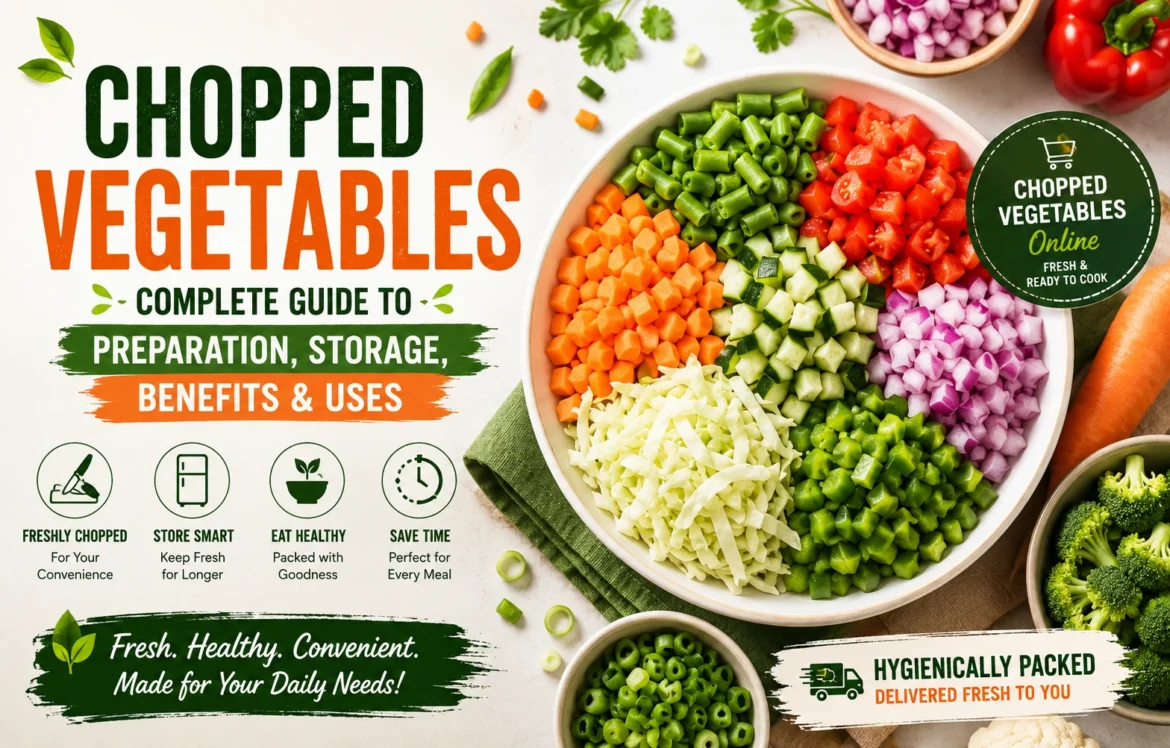
Chopped Vegetables: Complete Guide to Preparation, Storage, Benefits & Uses
- 21 Aug, 2026
- Posted by InHydro Team
- 0 Comment(s)
Chopping your own vegetables every single day sounds simple — until you’re staring at a mountain of carrots at 7 AM with nowhere near enough time. That’s exactly why chopped vegetables have become a kitchen staple for busy households, meal-preppers, and anyone who wants healthy food on the table without the daily prep marathon. This guide covers everything: what chopped vegetables actually are, how to prep and store them, how long they last, and the smartest ways to use them.
What Are Chopped Vegetables?
Chopped vegetables are simply vegetables cut into smaller, uniform pieces before cooking or storing. The term covers a range of techniques — dicing, slicing, mincing, and julienning are all forms of chopping veggies, just with different shapes and sizes.
Chopped vs. diced vs. sliced:
- Chopped — rough, medium-sized pieces, often uneven
- Diced — small, uniform cubes
- Sliced — thin, flat pieces
Why does this matter? Because cut size directly affects cooking time, texture, and how evenly a dish cooks. Smaller pieces cook faster and absorb flavor better, while larger chunks hold their shape in slow-cooked dishes like stews. Choosing the right cut for the right recipe is half the battle of good home cooking.
Why Do People Use Chopped Vegetables?
The appeal of pre-chopped vegetables comes down to one word: convenience. Specifically, they help with:
- Faster meal preparation — no cutting board required at dinnertime
- Consistent cooking — uniform pieces cook evenly
- Easy portioning — grab exactly what you need
- Streamlined meal prep — ideal for weekly batch cooking
- Ready-to-use in salads, stir-fries, soups, curries, and snack boxes
This isn’t about cutting corners on nutrition — it’s about removing friction from everyday cooking so healthy meals actually happen.
Types of Chopped Vegetables
Different vegetables call for different cuts. Here’s a quick look at some of the most commonly prepped varieties.
Chopped Carrots
Carrots finely chopped cook quickly and work well in stir-fries, salads, and soups, offering a natural sweetness and crunch.
Chopped Onions
A fine chop onion is a base ingredient in countless dishes — curries, gravies, sautés — and cuts prep time significantly.
Chopped Spring Onions
Used mostly as a garnish or flavor booster, spring onions are typically chopped just before serving to preserve their sharp, fresh bite.
Chopped Broccoli Florets
Chopped broccoli florets are a go-to for stir-fries and steaming, cooking faster and more evenly than whole heads.
Chopped Green Beans
Green beans chopped into smaller segments are easier to cook evenly and blend well into curries and sabzis.
Chopped Okra
Okra chopped ahead of time saves real effort, though it should be kept dry, since excess moisture affects texture during cooking.
Chopped Cabbage
Shredded or chopped cabbage is a staple for slaws, stir-fries, and quick sautés.
Chopped Capsicum
Adds color and crunch to stir-fries, sandwiches, and salads.
Chopped Cucumber
Best chopped Cucumber fresh due to its high water content, which can make it soften quickly once cut.
Chopped Tomatoes
Used in everything from salads to gravies; texture depends heavily on ripeness.
Chopped Beetroot
Great for salads and roasted dishes, though it can stain other ingredients if not stored separately.
Chopped Cauliflower
Chopped florets cook faster and work well roasted, stir-fried, or curried.
How to Prepare Chopped Vegetables
Getting chopping vegetables in advance right comes down to a simple process.
- Choose fresh vegetables — firm, unblemished produce lasts longer once cut.
- Wash and clean properly — rinse thoroughly to remove dirt and residue.
- Remove unwanted parts — peels, stems, or damaged sections.
- Choose the right cut size — based on the dish you’re preparing.
- Chop vegetables evenly — for consistent cooking.
- Dry before storage — excess moisture speeds up spoilage.
- Store properly — in the right container, at the right temperature.
How to Keep Chopped Vegetables Fresh
Keeping chopped vegetables fresh is really about controlling moisture, air, and temperature.
- Use airtight containers to limit air exposure and slow oxidation.
- Control excess moisture — pat vegetables dry before sealing them in.
- Keep vegetables refrigerated at a consistently cool temperature.
- Store different vegetables separately — some release moisture or odors that affect others.
- Label and date prepared vegetables so nothing gets forgotten at the back of the fridge.
How Long Do Chopped Vegetables Last in the Refrigerator?
There’s no single answer here — shelf life for chopped vegetables in the fridge depends on the vegetable itself.
| Vegetable | Typical Storage Consideration |
|---|---|
| Carrots | Generally store well when properly refrigerated |
| Onions | Store in a sealed container |
| Bell peppers | Keep dry and refrigerated |
| Broccoli | Use a ventilated or appropriate container |
| Cucumber | Can soften due to moisture |
| Tomatoes | Storage depends on ripeness and preparation |
| Green beans | Keep refrigerated and dry |
Can You Chop Vegetables in Advance?
Yes — chopping vegetables in advance is one of the most effective time-savers in the kitchen, but not every vegetable holds up equally well. Some are prone to:
- Browning (like potatoes or apples-adjacent produce)
- Moisture loss, leading to a limp texture
- Softening, especially high-water vegetables like cucumber
- Odor transfer, particularly with alliums like onions
Knowing which vegetables tolerate advance prep — and which don’t — makes cutting vegetables in advance far more practical.
Best Vegetables to Prepare in Advance
- Carrots — hold texture well for several days
- Onions — store well when sealed properly
- Bell peppers — stay crisp with dry storage
- Broccoli — holds up well in ventilated containers
- Green beans — fine when kept dry and cool
- Cabbage — sturdy and slow to wilt
- Cauliflower — similar durability to broccoli
- Cucumbers — best chopped closer to use due to moisture content
Benefits of Chopped Vegetables
- Saves preparation time on busy weeknights
- Makes meal preparation easier for families and individuals alike
- Helps with portioning, reducing food waste
- Makes cooking more convenient, especially for quick meals
- Makes salads easier to prepare with zero last-minute chopping
- Helps organize meal prep for the whole week
It’s worth being honest here: chopping vegetables doesn’t automatically make them “healthier.” What it does is make it more likely that you’ll actually cook and eat them. Vegetables remain nutritious when handled and stored appropriately, though some nutrients can be affected by cutting, air exposure, light, and how long they sit before use.
Best Uses for Chopped Vegetables
- Salads — perfect for quick, fresh cutting vegetables for salad prep
- Stir-fries — even cuts cook uniformly and quickly
- Soups — pre-chopped veggies go straight into the pot
- Curries — saves significant prep time on busy days
- Fried rice — small, diced pieces blend seamlessly
- Pasta — adds color, texture, and nutrition fast
- Sandwiches — thin-cut veggies layer easily
- Wraps — quick assembly with pre-cut ingredients
- Meal prep — batch-cook multiple meals for the week
- Snacks — ready-to-eat veggie sticks and bowls
Chopped Vegetables vs Whole Vegetables
| Factor | Chopped Vegetables | Whole Vegetables |
|---|---|---|
| Preparation | Faster cooking/prep | Requires preparation |
| Convenience | High | Lower |
| Storage | Requires appropriate storage | Usually easier |
| Meal prep | Very convenient | Requires additional prep |
| Shelf life | Can be shorter after cutting | Generally longer |
| Portioning | Easy | Requires cutting |
For households short on time, buying prepared fresh-cut vegetables — sometimes searched as cutted vegetables online — can bridge the gap between convenience and eating well.
Chopped Vegetables Online: What Should You Look For?
Buying chopped vegetables online means trusting someone else with a step you can’t personally verify — so a few checks matter:
- Freshness and visible quality
- Cut consistency across the pack
- Packaging that protects against moisture and contamination
- Hygiene standards during preparation
- Storage temperature during transit
- Preparation date, clearly marked
- Delivery conditions — was the cold chain maintained?
- Product information and available pack sizes
- Variety of vegetables on offer
What Makes Good Fresh-Cut Vegetables?
Firm texture, vibrant color, no discoloration or excess liquid at the bottom of the pack.
How Should Chopped Vegetables Be Packaged?
Sealed, breathable-where-appropriate packaging that limits air exposure while preventing moisture buildup.
What Should You Check Before Buying?
Preparation date, storage instructions, and pack size relative to how quickly you’ll use it.
Chopped Vegetables for Sale: What Buyers Should Know
When looking at chopped vegetables for sale, whether online or at a local vendor, weigh the same fundamentals: freshness, packaging, cut style, pack size, storage conditions, delivery reliability, and preparation date. A trustworthy seller will usually be transparent about all of these upfront.
Common Mistakes When Storing Chopped Vegetables
- Leaving vegetables uncovered in the fridge
- Ignoring excess moisture before sealing
- Overcrowding storage containers
- Storing vegetables while still warm
- Keeping cut vegetables far longer than recommended
- Mixing vegetables with different storage needs
- Poor or inconsistent refrigeration
Frequently Asked Questions
What are chopped vegetables?
Vegetables that have been cut into smaller pieces — diced, sliced, or roughly chopped — for easier cooking and storage.
Are chopped vegetables healthy?
Yes, when stored and handled properly. Nutrient content can be affected by air, light, and storage time, but chopped vegetables remain a nutritious choice.
How long do chopped vegetables last in the fridge?
It varies by vegetable — sturdier options like carrots and cabbage last longer, while high-moisture vegetables like cucumber soften faster.
How do you keep chopped vegetables fresh?
Use airtight containers, control moisture, refrigerate consistently, store vegetables separately, and label them with prep dates.
Can vegetables be chopped in advance?
Yes, though results vary by vegetable — some hold up for days, while others are best chopped closer to use.
Can I buy chopped vegetables online?
Yes, many sellers offer fresh-cut vegetables online, but check freshness, packaging, and preparation date before ordering.
Which vegetables are best for chopping ahead of time?
Carrots, onions, bell peppers, broccoli, green beans, cabbage, and cauliflower generally hold up well.
Can chopped vegetables be stored in the refrigerator?
Yes — refrigeration is essential for keeping cut vegetables safe and fresh for longer.
What vegetables are commonly sold pre-cut?
Carrots, onions, cabbage, broccoli, cauliflower, and mixed stir-fry blends are among the most common.
