
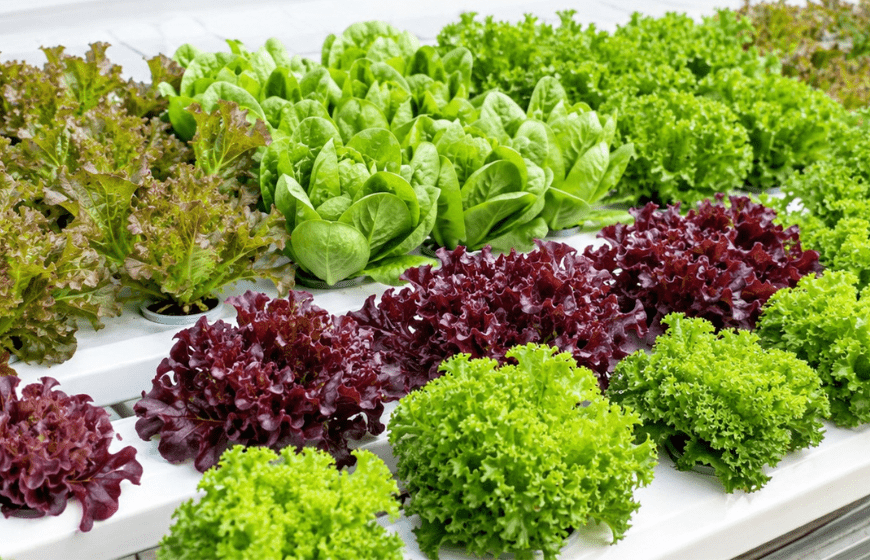
Hydroponic Lettuce: Benefits, Nutrition, Varieties & Uses
- 05 Jun, 2026
- Posted by ruchit seo.inhydro
- 0 Comment(s)
If you have noticed more crisp, vibrant lettuce appearing on restaurant menus, in premium salad kits, and on supermarket shelves, there is a good reason. Hydroponic lettuce has become the preferred choice for consumers, chefs, and food businesses who refuse to compromise on freshness, quality, or nutrition.
Grown without soil in precisely controlled environments, hydroponic lettuce delivers a consistently superior product — cleaner leaves, richer colour, better texture, and longer shelf life — that traditional field farming simply cannot replicate with the same reliability. And as awareness of what we eat and how it is grown continues to rise, hydroponic lettuce is moving from a niche product to a mainstream staple.
This guide covers everything you need to know: what hydroponic lettuce is, its full nutritional profile, the health benefits backed by evidence, the most popular varieties, and why it has become the go-to choice for home cooks, restaurants, and health-conscious consumers alike.
What Is Hydroponic Lettuce?
Hydroponic lettuce is lettuce cultivated without soil. Rather than drawing minerals from the ground, plants are grown in a controlled environment — typically a greenhouse, vertical farm, or indoor growing facility — where their roots receive a carefully balanced, water-based nutrient solution containing every mineral essential for healthy growth.
This method, known as hydroponic farming, gives growers precise control over every variable that affects plant development: nutrient concentration, water pH, temperature, humidity, light spectrum, and CO₂ levels. The result is lettuce that grows faster, more consistently, and with greater predictability than its conventionally farmed counterpart.
Hydro lettuce, as it is often called in the industry, typically reaches harvest maturity in 30 to 45 days — significantly faster than soil-grown varieties. Each harvest produces heads of uniform size, colour, and texture, which is why food service businesses in particular have embraced it so enthusiastically.
What makes hydroponic lettuce genuinely different is not just how it is grown but what that growing method means for the end consumer: produce that is cleaner, fresher, and more nutritionally intact by the time it reaches your plate.
Lettuce Nutrition: What Does It Actually Give You?
Before exploring the specific benefits of hydroponic lettuce, it is worth understanding why lettuce — in any form — earns its place as a dietary staple. Lettuce nutrition is often underestimated. It is far more than just a crunchy, water-filled filler.
At just 15 calories per 100 grams, lettuce delivers a meaningful spread of micronutrients. It is particularly notable for its Vitamin K content, as well as its folate, Vitamin A, and antioxidant compounds.
Freshly harvested hydroponic lettuce retains these nutrients more effectively than produce that has spent days in refrigerated transit, because post-harvest nutrient degradation begins almost immediately after cutting.
Top Lettuce Benefits Supported by Nutritional Science
| ⚖️ Weight Management Only ~15 kcal per 100g. High fibre contributes to fullness and curbs overeating. |
💧 Hydration 95% water by weight. Supports circulation, kidney function and daily fluid intake. |
| 🫁 Digestive Health Dietary fibre acts as a prebiotic, feeding beneficial gut bacteria and supporting regular digestion. |
🦴 Bone Health Vitamin K activates osteocalcin, the protein that binds calcium into bone tissue. |
| ❤️ Cardiovascular Health Potassium regulates blood pressure. Antioxidants neutralise free radicals linked to arterial inflammation. |
🛡️ Immune Function Vitamins A and C regulate immune activity and support white blood cell function. |
| ✨ Skin Health Vitamin A drives cell turnover; Vitamin C is essential for collagen synthesis and skin elasticity. |
👁️ Eye Health Beta-carotene and lutein in darker varieties reduce risk of macular degeneration and cataracts. |
Popular Lettuce Varieties: Which Should You Choose?
Hydroponic farming is ideally suited to producing a wide range of lettuce varieties, each with its own distinctive character, texture, and best use in the kitchen.
Dense, crisp, mild flavour. Best for: burgers, sandwiches, tacos, wraps, and raw salads where crunch is the priority.
Most nutrient-dense. Highest Vitamin A, K, and folate. Best for: Caesar salads, grain bowls, and substantial wraps.
Velvety, mildly sweet leaves. Cup-shaped for edible vessels. Best for: gourmet salads, lettuce cups, fine dining presentations.
Tender, loosely formed head, gentle flavour. Best for: everyday salads, sandwiches, and mild flavour dishes.
Loose frilled leaves with extra anthocyanin antioxidants in red varieties. Best for: mixed salads, garnishes, colourful presentations.
Why Hydroponic Lettuce Is the Smarter Choice
For food service operations — restaurants, hotels, cafés, caterers, and cloud kitchens — the case for hydroponic lettuce is especially compelling. Consistency, presentation, and supply reliability are non-negotiable at a professional level.
|
🛡️
Cleaner & safer — no soil-borne bacteria or pesticide residue
|
⭐
Consistent quality — uniform size, colour, and texture every time
|
🚚
Harvested fresh — farm to consumer in 24–48 hours
|
📅
Available year-round — unaffected by seasons or weather
|
Versatile Uses of Fresh Lettuce in the Kitchen
Fresh hydroponic lettuce is one of the most adaptable ingredients in any kitchen.
| ● Salads — every style and occasion | ● Burgers & sandwiches — crisp crunch |
| ● Wraps & lettuce cups — low-carb | ● Healthy bowls — nutritious base |
| ● Smoothies & juices — mild, blends well | ● Garnishing & plating — visual variety |
Frequently Asked Questions
Conclusion
Hydroponic lettuce is not simply a trend — it is a meaningful evolution in how we grow, source, and consume one of the world’s most popular vegetables. From its impressive nutritional profile and wide-ranging health benefits to the exceptional quality of varieties like iceberg, romaine, butter, and leaf lettuce, hydroponic cultivation consistently outperforms conventional alternatives in freshness, cleanliness, and reliability.
