
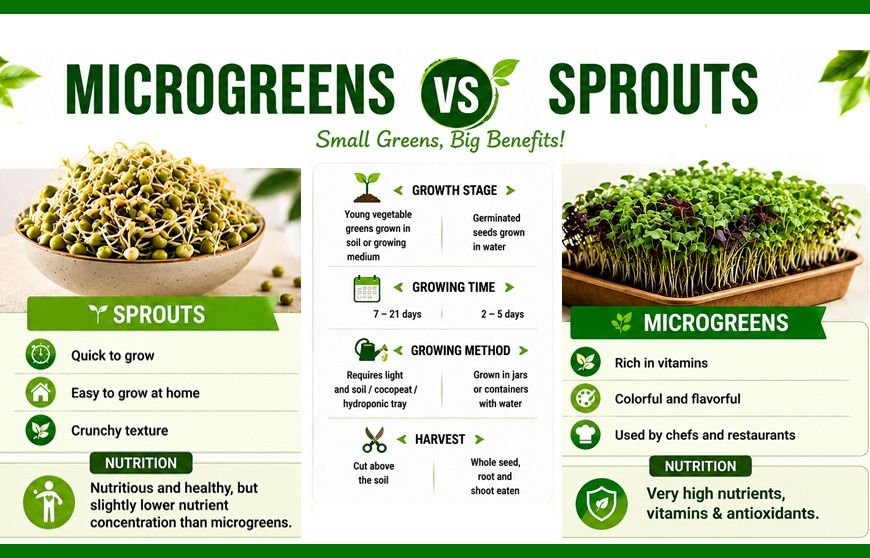
Microgreens vs Sprouts: What’s the Difference and Which Is Healthier?
- 06 May, 2026
- Posted by InHydro Team
- 0 Comment(s)
Healthy eating trends have made both microgreens and sprouts extremely popular among fitness enthusiasts, home gardeners, and health-conscious consumers. These young greens are often praised for their nutritional value, fresh taste, and versatility in meals. However, many people still get confused about the real difference between microgreens and sprouts.
Are microgreens healthier than sprouts? Which one contains more nutrients? Are sprouts safe to eat raw? Which option is better for weight loss and healthy eating?
If you have similar questions, this complete guide on microgreens vs sprouts will help you understand everything in a simple and practical way.
In this article, we will compare microgreens and sprouts based on:
- Nutrition
- Health benefits
- Growing methods
- Taste and texture
- Safety
- Shelf life
- Weight loss benefits
- Daily usage
By the end of this guide, you will clearly understand the difference between sprouts and microgreens and which one may be the better choice for your lifestyle and health goals.
Quick Comparison: Microgreens vs Sprouts
| Feature | Microgreens | Sprouts |
|---|---|---|
| Growing Method | Soil or growing medium | Water only |
| Growth Time | 7–21 days | 2–7 days |
| Harvest Stage | After true leaves appear | Germination stage |
| Taste | Strong and flavorful | Mild and crunchy |
| Nutrition | Rich in antioxidants | Rich in enzymes |
| Shelf Life | Longer | Shorter |
| Light Requirement | Needs sunlight/grow light | No sunlight initially |
| Common Uses | Salads, smoothies, bowls | Sandwiches, stir-fries |
What Are Microgreens?
Microgreens are young vegetable greens harvested after the first true leaves appear. They are grown in soil or another growing medium and are usually harvested within 1–3 weeks after planting.
Popular microgreens include:
- Broccoli microgreens
- Radish microgreens
- Sunflower microgreens
- Mustard microgreens
- Beetroot microgreens
- Kale microgreens
Microgreens are widely used in:
- Salads
- Smoothies
- Sandwiches
- Soups
- Rice bowls
- Healthy wraps
They are popular because they provide fresh flavor, vibrant color, and concentrated nutrients in a very small serving.
What Are Sprouts?
Sprouts are germinated seeds harvested very early during the growing process. Unlike microgreens, sprouts are grown only in water without soil and are usually ready to eat within a few days.
The entire sprout is consumed, including:
- Root
- Stem
- Seed
Common sprouts include:
- Mung bean sprouts
- Alfalfa sprouts
- Broccoli sprouts
- Lentil sprouts
- Chickpea sprouts
Sprouts are commonly added to:
- Sandwiches
- Salads
- Indian snacks
- Stir-fried dishes
- Healthy breakfast meals
Because sprouts grow quickly and are easy to prepare, they are widely used in healthy diets.
Difference Between Microgreens and Sprouts
Although microgreens and sprouts may appear similar initially, there are major differences between them.
1. Growing Method
Microgreens are grown in soil or a growing medium and require light for growth. Sprouts grow only in water and do not initially require sunlight.
2. Harvest Time
Sprouts are harvested much earlier, usually within 2–7 days. Microgreens take longer and are harvested after developing leaves.
3. Parts Consumed
In sprouts, the entire plant including the root and seed is eaten. In microgreens, only the stem and leaves are consumed.
4. Taste
Microgreens generally have stronger flavors ranging from spicy to sweet depending on the variety. Sprouts usually have a milder and crunchier taste.
5. Shelf Life
Microgreens often stay fresh longer when stored correctly, while sprouts spoil faster because of their high moisture content.
Microgreens vs Sprouts Nutrition
One of the main reasons people consume both microgreens and sprouts is their nutritional value.
Both contain:
- Vitamins
- Minerals
- Fiber
- Antioxidants
- Plant compounds
However, some studies suggest that microgreens may contain higher concentrations of certain nutrients compared to mature vegetables.
Nutritional Benefits of Microgreens
Microgreens are rich in:
- Vitamin C
- Vitamin K
- Vitamin E
- Beta carotene
- Antioxidants
- Polyphenols
Broccoli microgreens are especially popular for containing sulforaphane, a compound studied for its antioxidant properties.
Nutritional Benefits of Sprouts
Sprouts are known for:
- Plant-based protein
- Digestive enzymes
- Folate
- Iron
- Magnesium
- Vitamin C
Sprouting can also improve nutrient absorption in some seeds and legumes.
Are Microgreens Healthier Than Sprouts?
This is one of the most searched questions online.
Both microgreens and sprouts are healthy, but many people prefer microgreens because they often contain higher antioxidant levels and more developed nutrients.
Why People Prefer Microgreens
Microgreens may offer:
- Better flavor
- Higher antioxidant content
- Longer freshness
- Lower contamination risk
- Better appearance for meals
Why Some People Prefer Sprouts
Sprouts are popular because they are:
- Easy to grow
- Budget-friendly
- Quick to prepare
- Rich in enzymes
- Common in traditional diets
Choosing between sprouts vs microgreens depends on your dietary goals and taste preferences.
6 -Amazing Health Benefits of Microgreens
1. Rich in Antioxidants
Microgreens contain antioxidants that help protect the body from oxidative stress and free radical damage.
Antioxidants may support:
- Healthy aging
- Better skin health
- Cellular protection
- Overall wellness
2. Supports Immunity
Many microgreens are rich in vitamins and minerals that support immune function.
Vitamin C-rich varieties may help support the body’s natural defense system.
3. May Support Heart Health
Some microgreens contain compounds linked to cardiovascular wellness.
Broccoli microgreens, for example, contain sulforaphane, which has been studied for its antioxidant properties.
4. May Help With Weight Management
Microgreens are:
- Low in calories
- Nutrient-dense
- Filling
- Easy to include in healthy meals
This makes them useful for balanced weight-loss diets.
5. Supports Healthy Digestion
Many microgreens contain fiber that may support digestion and gut health.
6. Easy to Add to Daily Meals
Microgreens can easily be included in:
- Salads
- Smoothies
- Wraps
- Omelets
- Soups
- Sandwiches
This makes healthy eating more convenient and enjoyable.
Are Sprouts and Microgreens Safe to Eat?
Food safety is important when consuming fresh greens.
Sprouts and Bacterial Risk
Because sprouts grow in warm and humid conditions, they may carry a higher risk of bacterial contamination if not handled properly.
This may include bacteria such as:
- Salmonella
- E. coli
- Listeria
Proper washing and hygienic growing conditions are important.
Why Microgreens Are Often Considered Safer
Microgreens are generally grown in more ventilated environments with better airflow and sunlight exposure, which may reduce contamination risk.
However, freshness and hygiene remain important for both.
Which Tastes Better: Microgreens or Sprouts?
Taste depends on personal preference.
Microgreens Taste
Microgreens often have stronger flavors such as:
- Peppery
- Sweet
- Nutty
- Fresh
Examples:
- Radish microgreens taste spicy
- Sunflower microgreens taste nutty
Sprouts Taste
Sprouts are generally:
- Mild
- Crunchy
- Neutral in flavor
They are suitable for lighter dishes and snacks.
Microgreens vs Sprouts for Weight Loss
Both microgreens and sprouts can support healthy eating habits.
However, microgreens may be more useful in weight-loss diets because they:
- Add flavor without many calories
- Improve meal nutrition
- Increase satiety
- Work well in salads and bowls
Can You Eat Microgreens and Sprouts Daily?
Yes, most people can consume both regularly as part of a balanced diet.
However:
- Wash them properly
- Buy from trusted sources
- Store correctly
- Avoid spoiled products
People with weakened immune systems should be extra cautious with raw sprouts.
Frequently Asked Questions
Are microgreens and sprouts the same thing?
No. Sprouts are germinated seeds eaten whole, while microgreens are harvested later after leaves develop.
Are microgreens healthier than sprouts?
Microgreens may contain higher antioxidant and vitamin levels, but both are nutritious foods.
Can you eat microgreens raw?
Yes. Microgreens are commonly eaten raw in salads, wraps, smoothies, and sandwiches.
Which microgreens are most nutritious?
Popular nutrient-rich microgreens include:
- Broccoli microgreens
- Radish microgreens
- Sunflower microgreens
- Kale microgreens
Final Thoughts
The comparison between microgreens vs sprouts continues because both provide valuable nutrition and unique health benefits.
Microgreens are known for their strong flavor, antioxidant content, and vibrant appearance, while sprouts are appreciated for convenience, affordability, and enzyme-rich nutrition.
Understanding the difference between sprouts and microgreens can help you make healthier food choices based on your personal lifestyle, diet, and nutritional goals.
Whether you choose microgreens, sprouts, or both, adding fresh greens to your meals is a smart step toward healthier eating and better nutrition.
